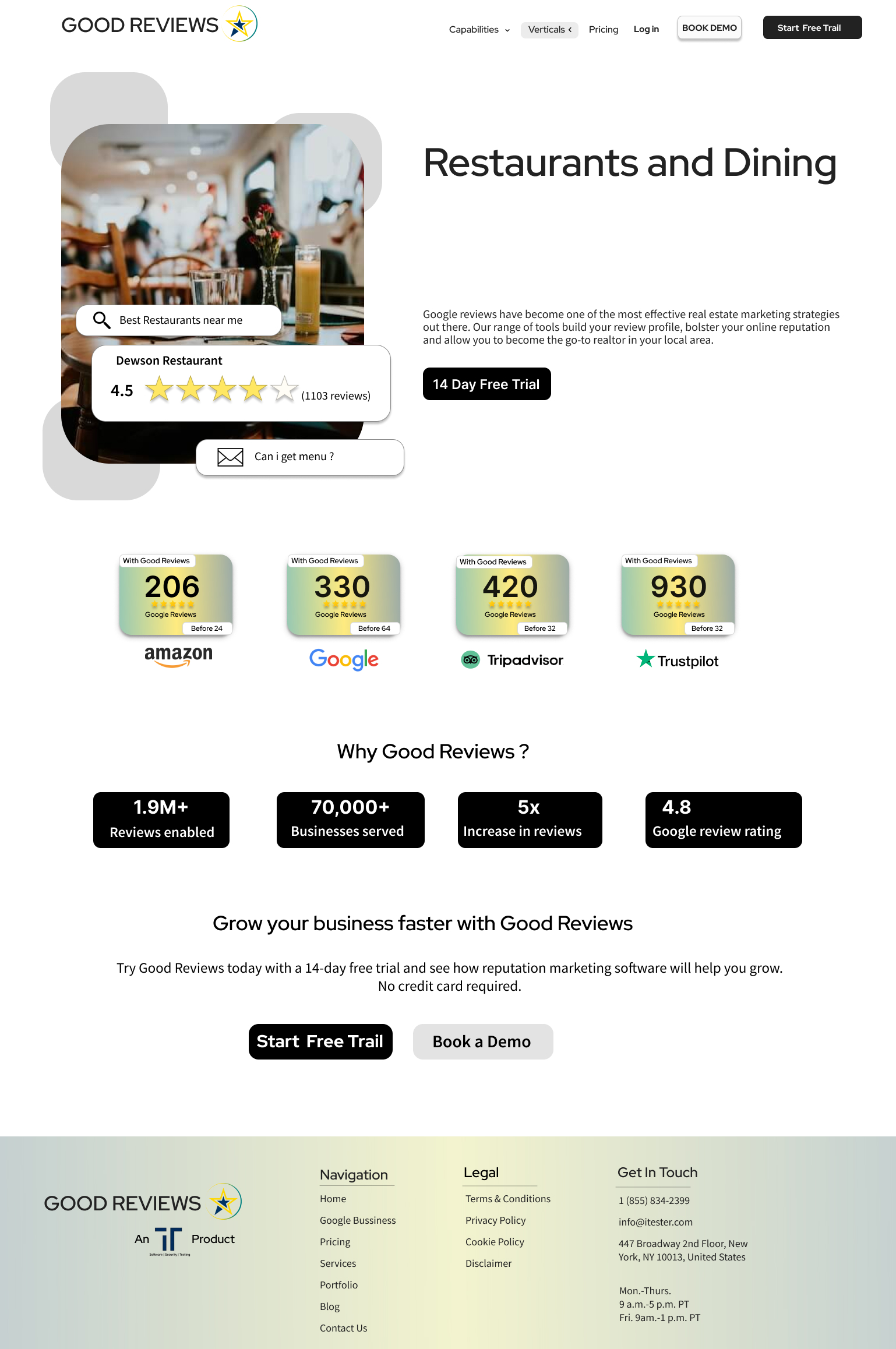
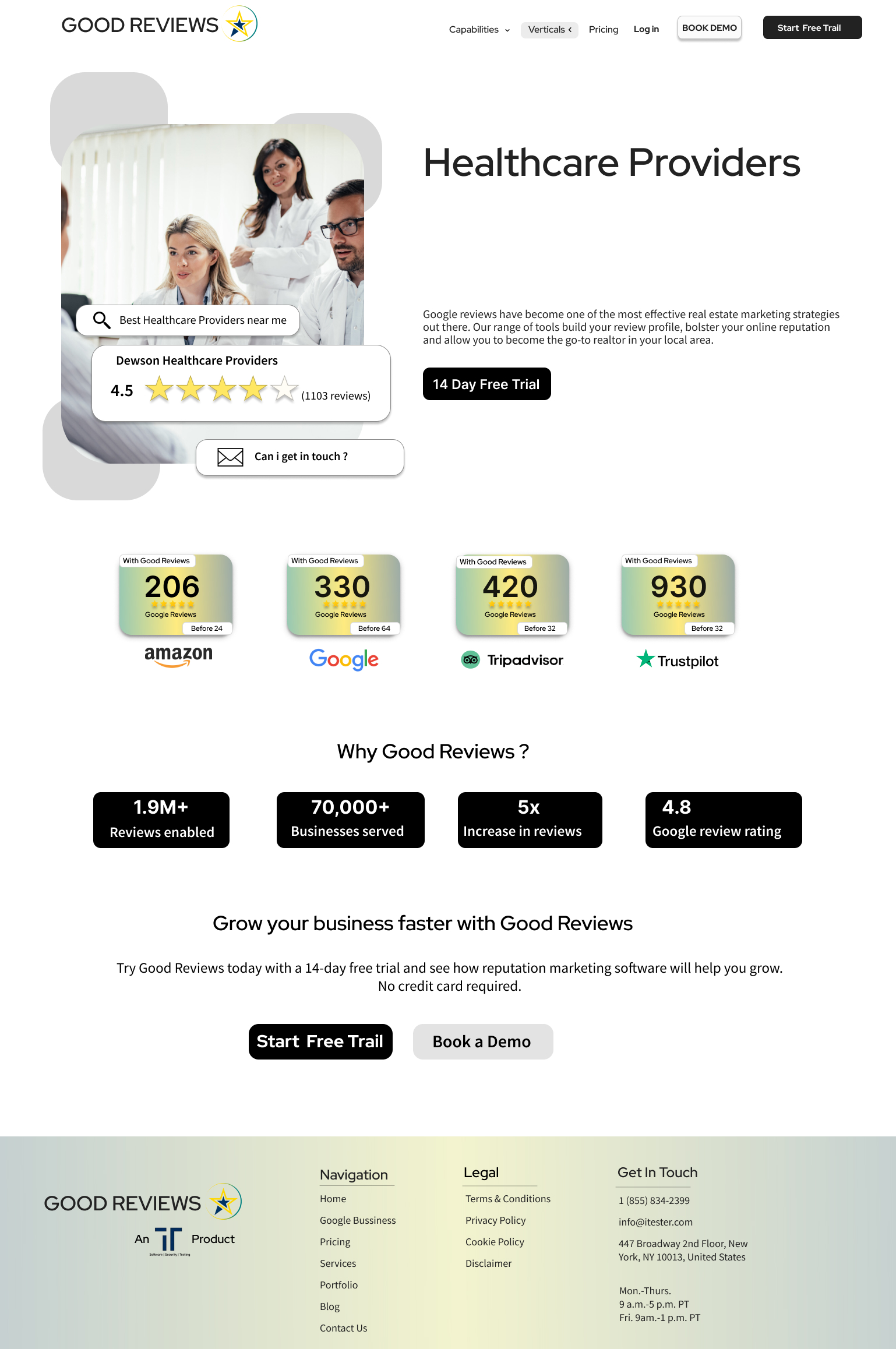
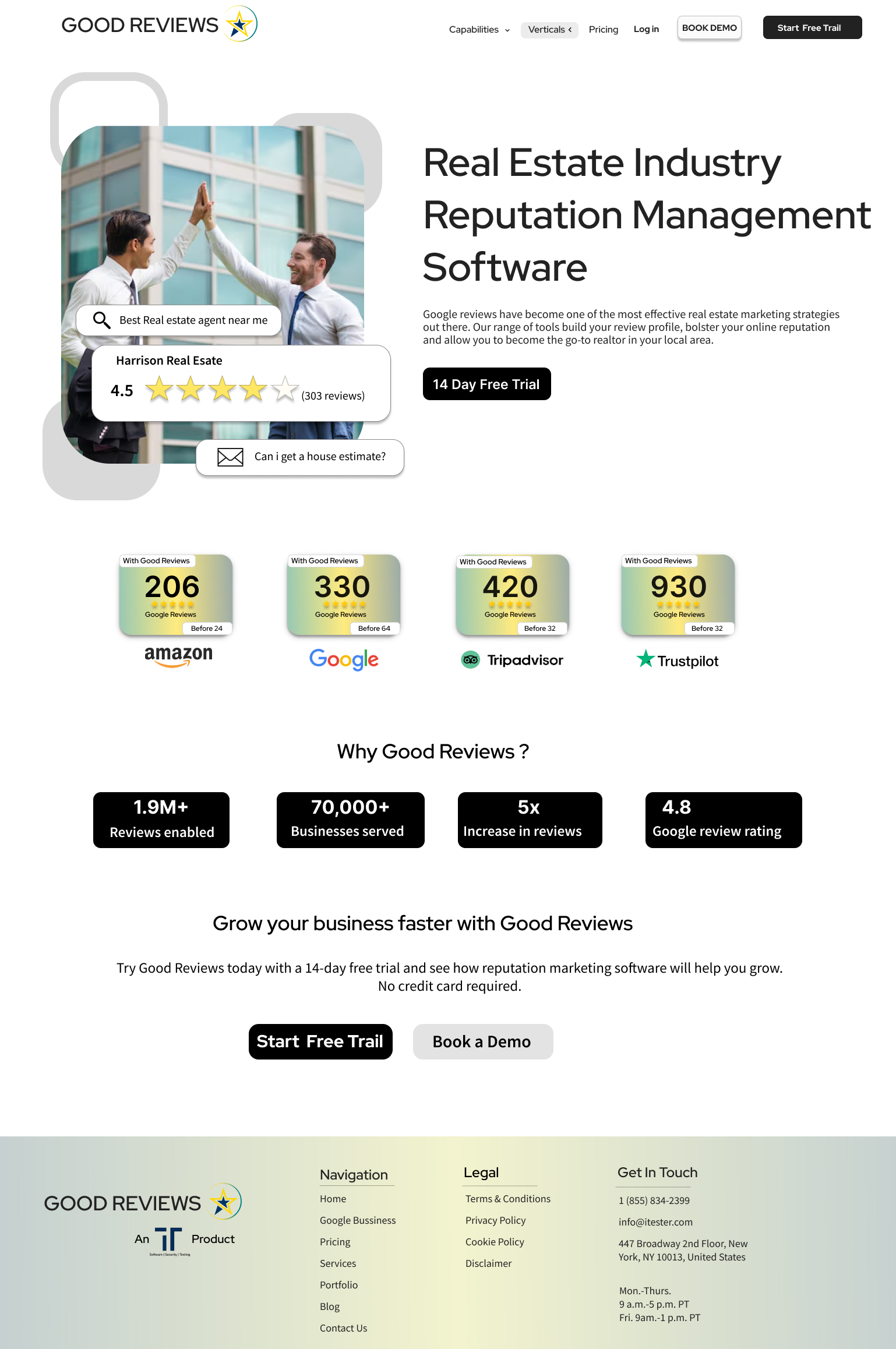
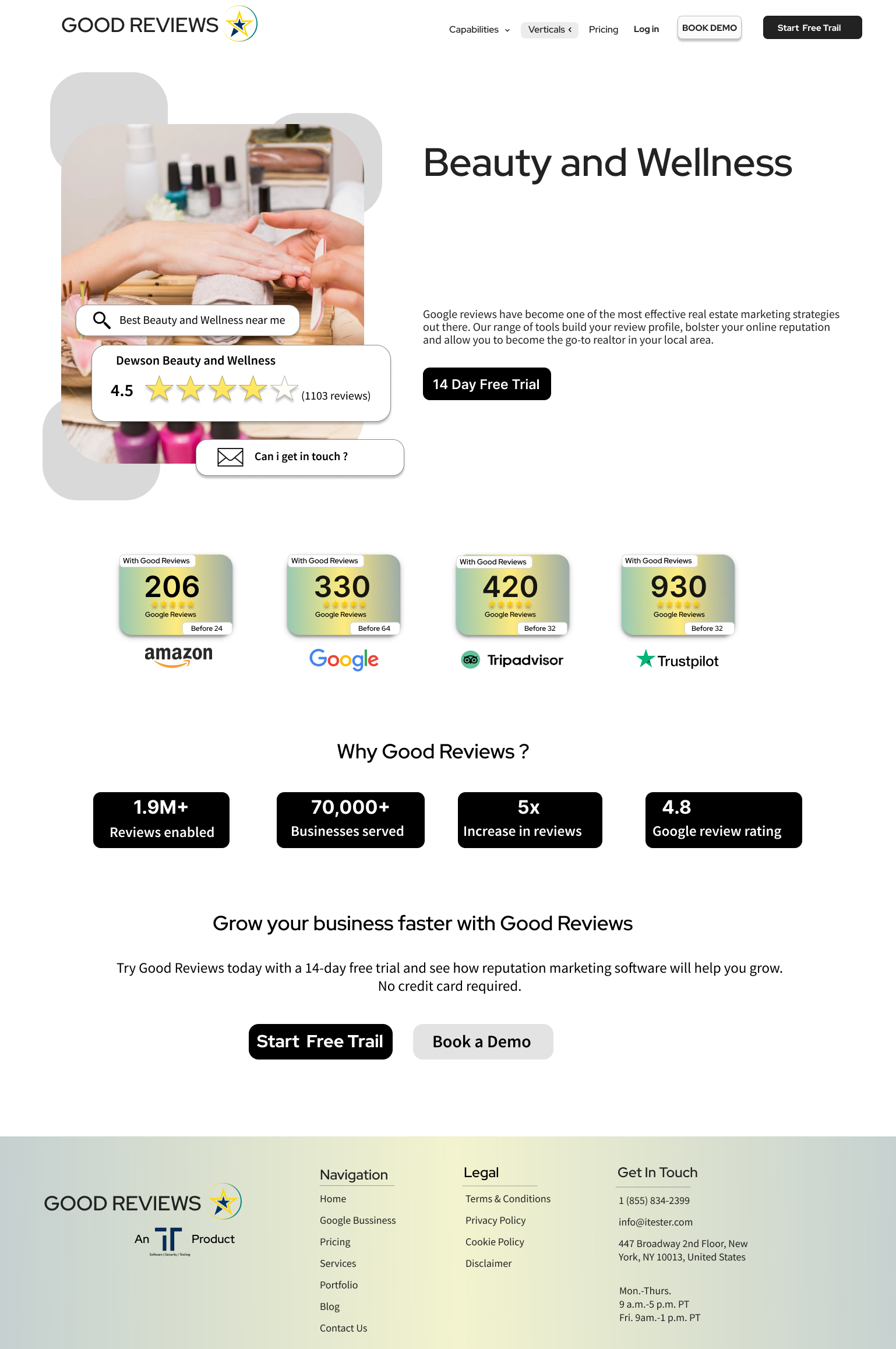
24+industry verticals — one SaaS product that had to feel purpose-built for each
In a world where a single review can make or break a business, companies needed more than a dashboard — they needed an omnichannel reputation platform that could listen, respond, and grow across every industry vertical.
Problems identified
Fragmented reputation toolsBusinesses managed reviews across disconnected channels without a unified view
Generic landing pagesOne-size-fits-all marketing failed to convert diverse industry audiences
SaaS activation frictionComplex onboarding, pricing, and payment flows caused drop-off before subscription
Design scale challenge24+ verticals risked visual fragmentation without a shared system
Low engagementMarketing pages underperformed without conversion-focused, industry-tailored UX
Business goals
01Build one unified design system scalable across all industry verticals
02Drive measurable engagement and conversion growth across marketing pages
03Create frictionless SaaS paths from discovery through subscription and payment
04Deliver omnichannel review management from acquisition to daily use
My role: Lead UI/UX Designer — owned the full frontend experience, design system, 24 industry landing pages, and end-to-end SaaS activation flows.
Research & Insights
Understanding the reputation SaaS gap
Research before pixels — analyzing competitor platforms, interviewing SMB owners, and mapping the full subscription lifecycle.
01
Analyzed competitor reputation management SaaS platforms and their UX gaps
02
Interviewed SMB owners across restaurants, healthcare, real estate, and local services
03
Mapped the end-to-end journey from landing page through subscription and daily use
04
Identified modular template architecture needed to scale 24 industry verticals
Key insight
Businesses don't need another generic dashboard — they need industry-specific experiences that still feel like one cohesive, trustworthy product.
02 · Approach
One system, infinite verticals
I designed the entire frontend experience from the ground up — establishing a design system first, then building modular page templates that could adapt to any industry without reinventing the wheel.
Core SaaS flows — homepage, login, pricing, subscription, and payment gateway — became the product backbone. Industry landing pages followed a repeatable structure: hero, value propositions, social proof, and conversion CTAs — customized per vertical while sharing one interaction language.
Design Strategy
Design goals & success metrics
Every design decision tied to measurable outcomes — consistency at scale, conversion through clarity, and engagement across every vertical.
Design goal
Success metric
One design system across all verticals
Visual consistency across 24+ industry pages
Frictionless SaaS activation
Subscription and onboarding conversion rate
Industry-tailored landing experiences
Landing page engagement and time on page
Omnichannel reputation management
Client retention and repeat platform use
Product Features
Key design challenges & solutions
Four scale problems — each solved with modular architecture and a unified design language across the GoodReviews ecosystem.
Challenge
Solution
Impact
24 industry verticals
Modular page templates + shared design system
Scale without fragmentation
SaaS activation friction
Unified onboarding → pricing → payment flows
Higher conversion
Low marketing engagement
Conversion-focused heroes + social proof patterns
800% engagement growth
Inconsistent brand experience
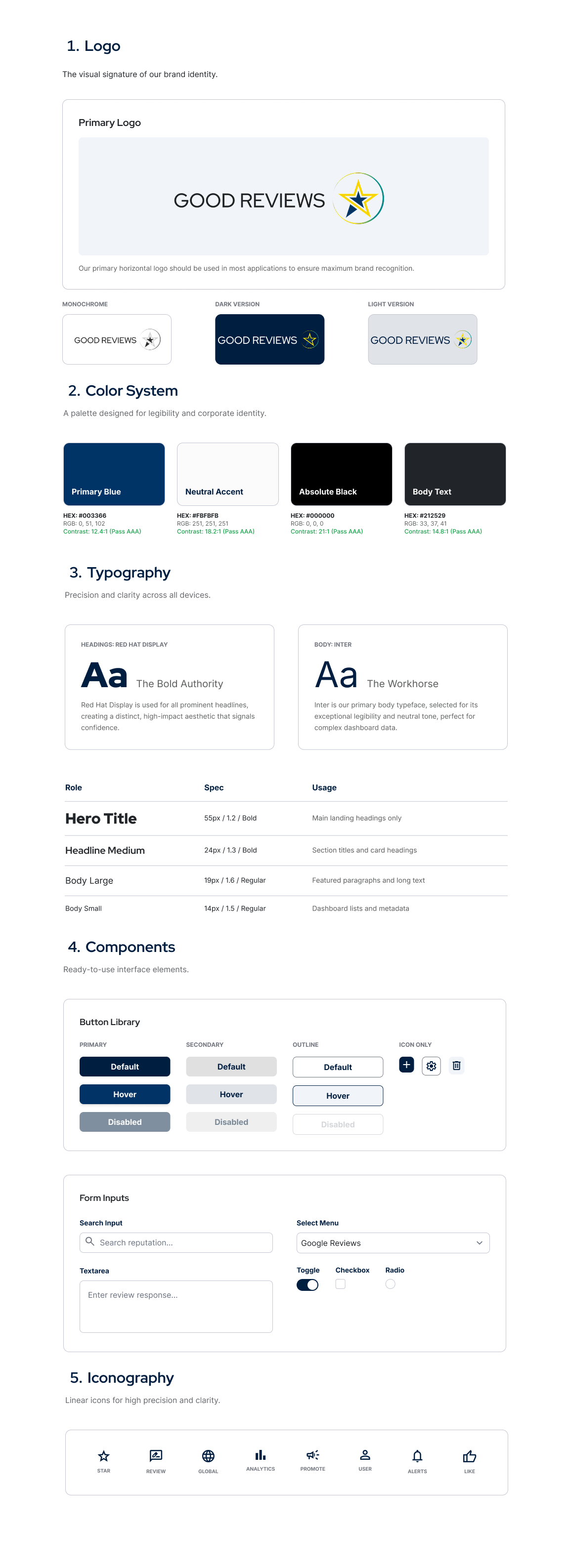
Shared typography, color, and component library
One product language
In practice
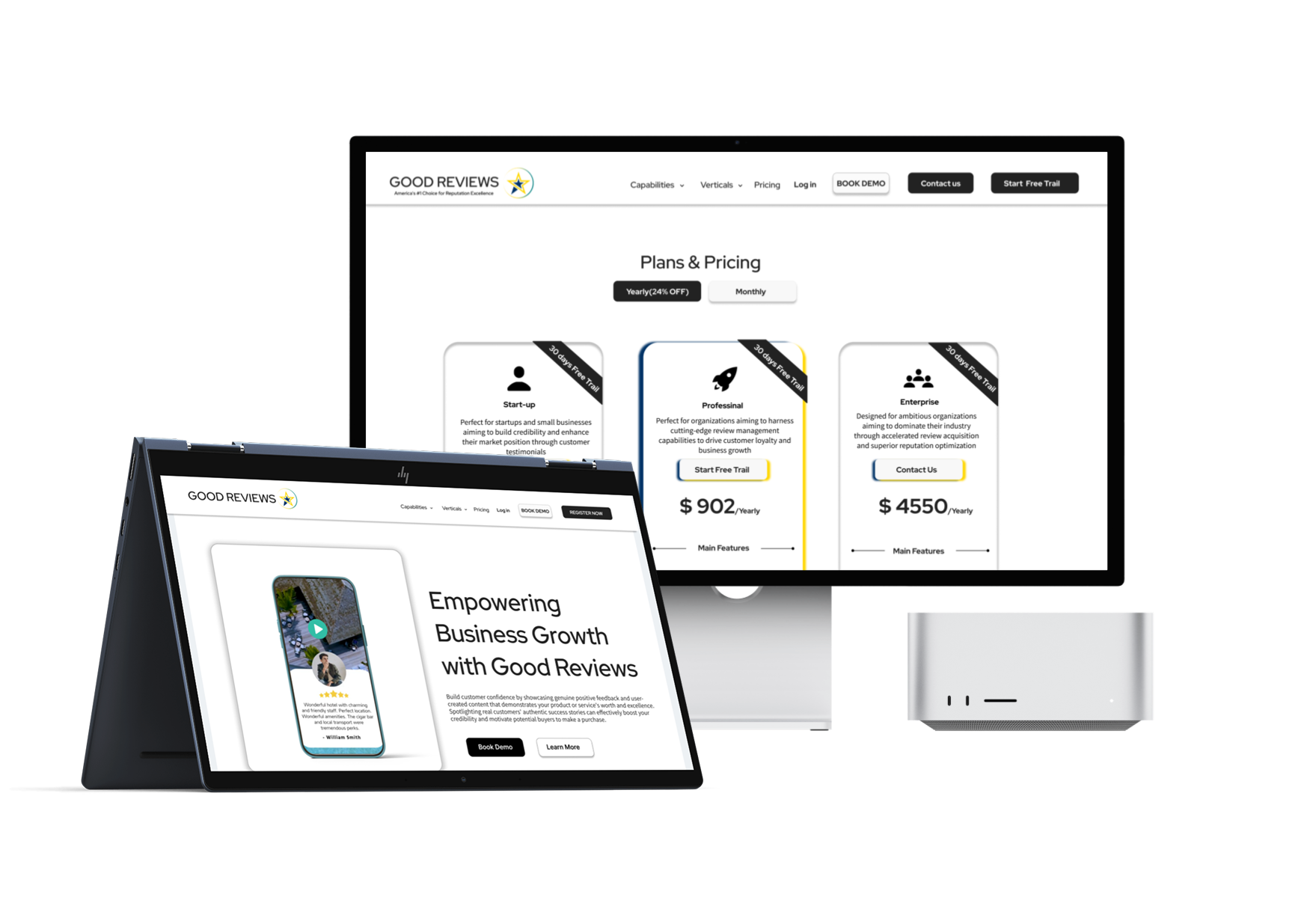
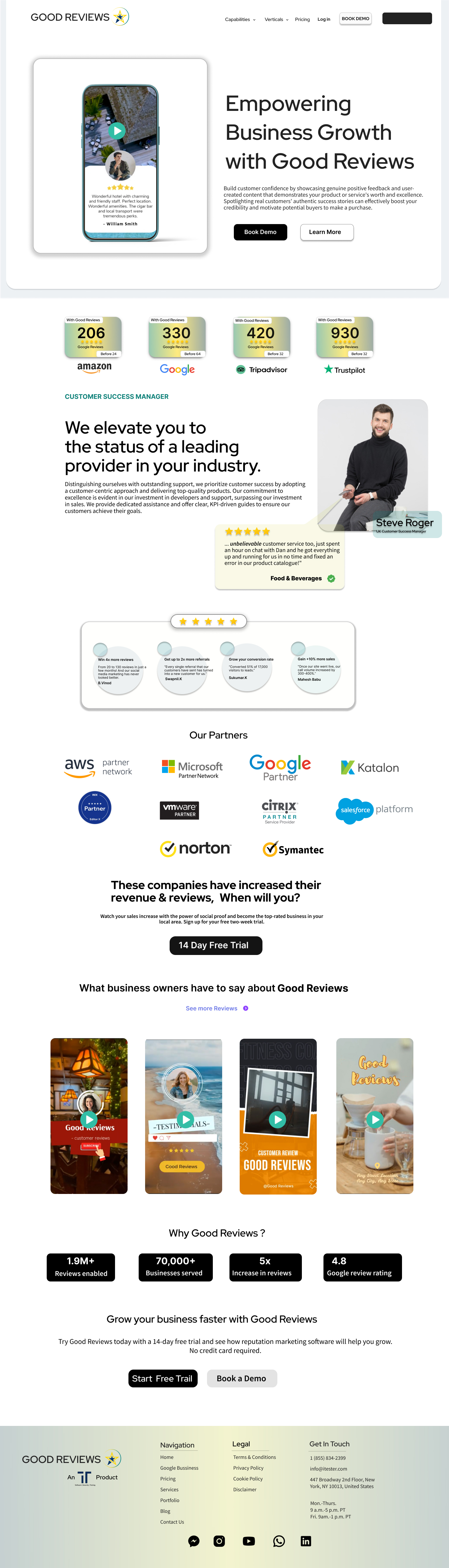
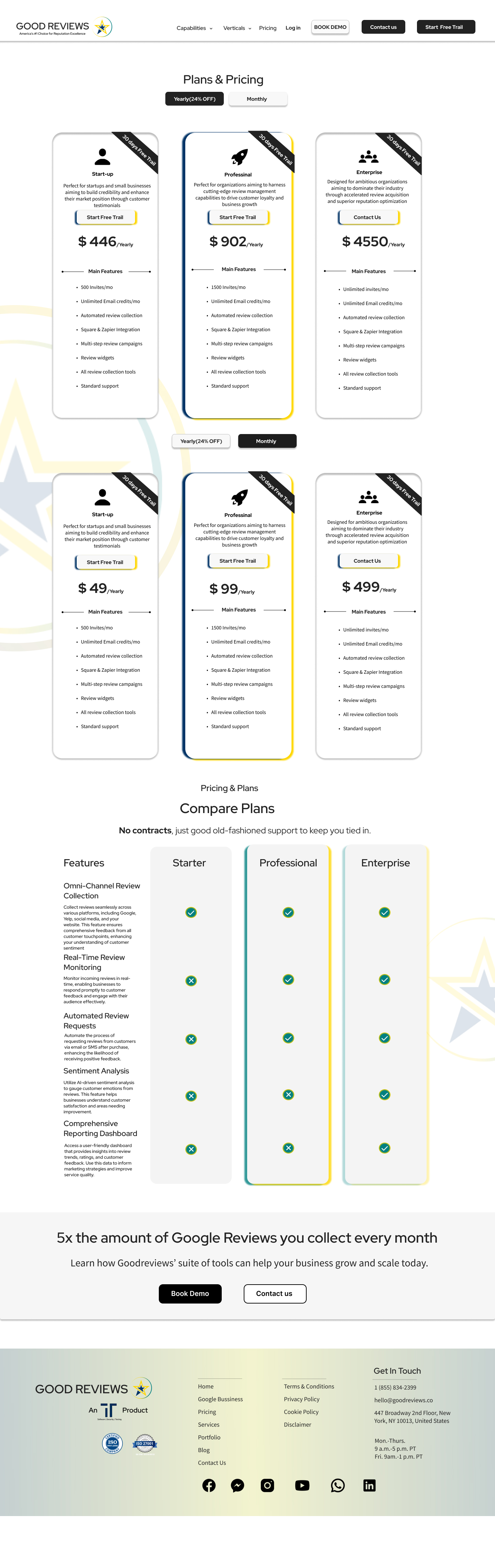
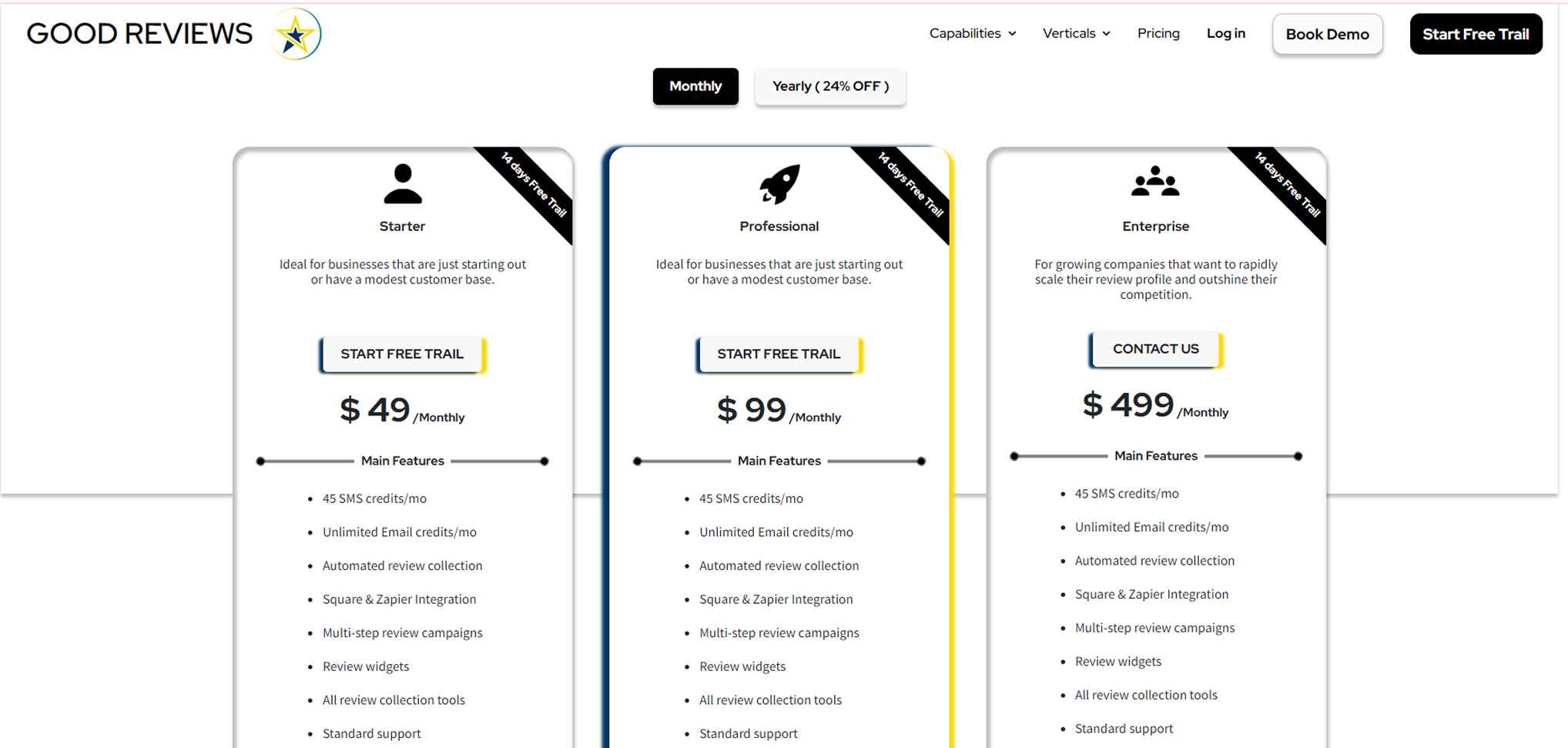
SaaS Core · Homepage & Pricing
HomepagePricing
Click any screen to enlarge
04 · Design Process
Design process
A six-stage practice — from product conceptualization through validated hi-fi screens and iteration across every vertical.
Process followed
1
Product Conceptualization & PRD Creation
2
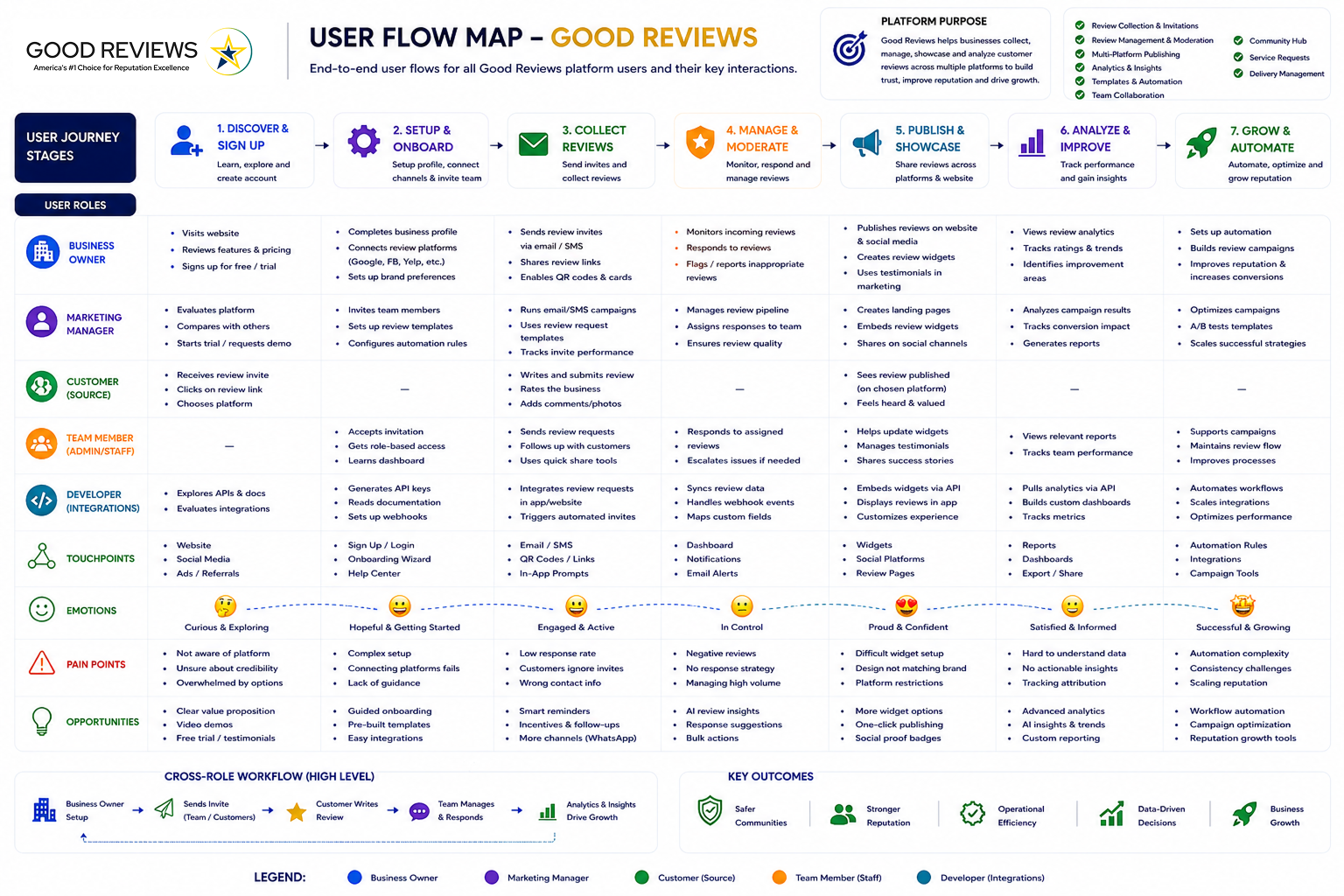
User Flow Mapping
3
Wireframing & Prototyping
4
High-fidelity UI Design
5
Usability Validation
6
Iteration Based on Feedback
Design process steps
Tools usedFigmaAdobe XDMiro
03 · Key Screens
SaaS core & industry verticals
Twenty-four industry pages plus core SaaS flows — MacBook Pro frames with 16:10 viewport. Scroll inside each screen like a live website. Use arrows to browse.
↕ Scroll
Homepage
↕ Scroll
Login
↕ Scroll
Pricing
↕ Scroll
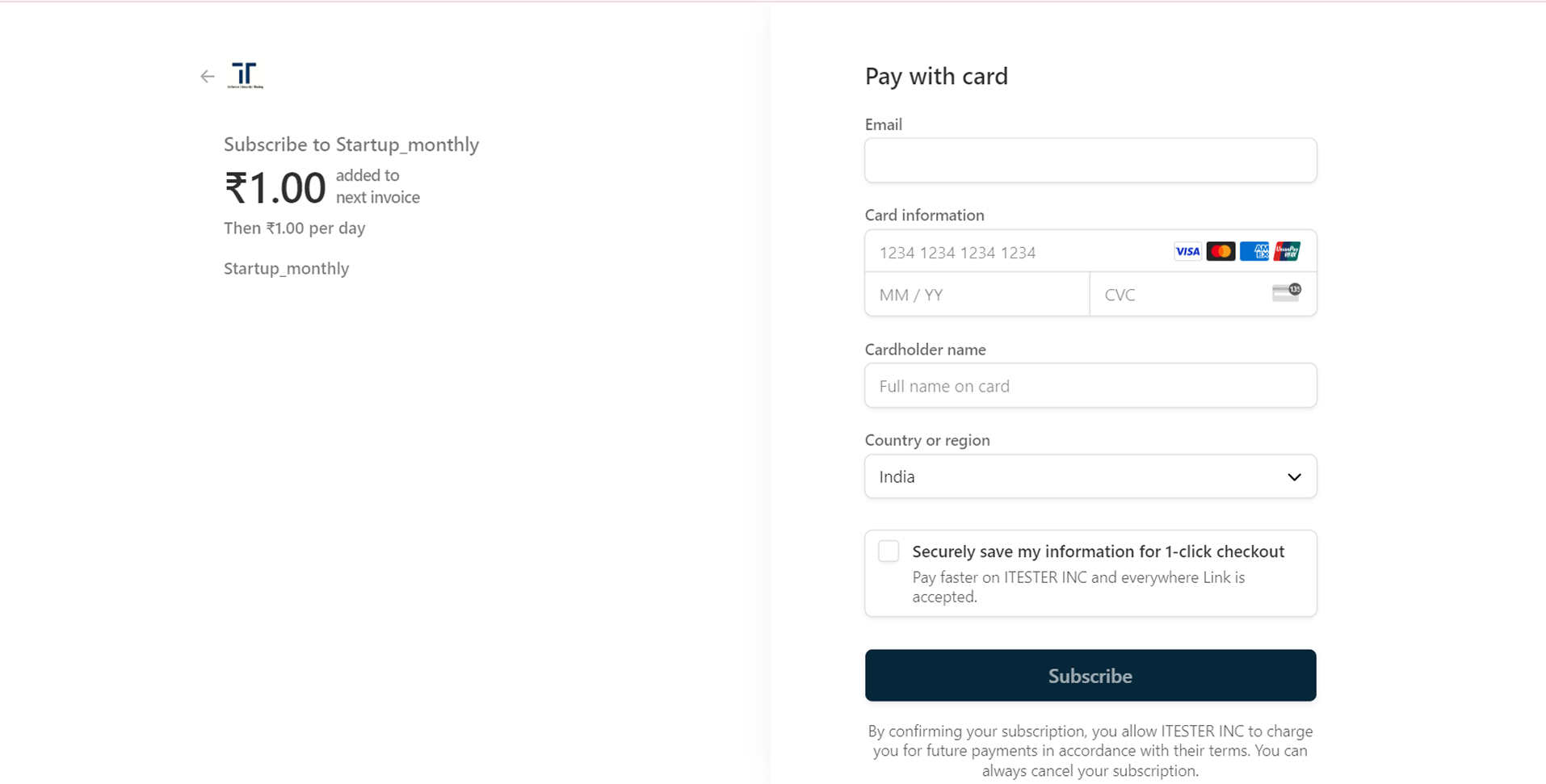
Subscription
↕ Scroll
Payment Gateway
↕ Scroll
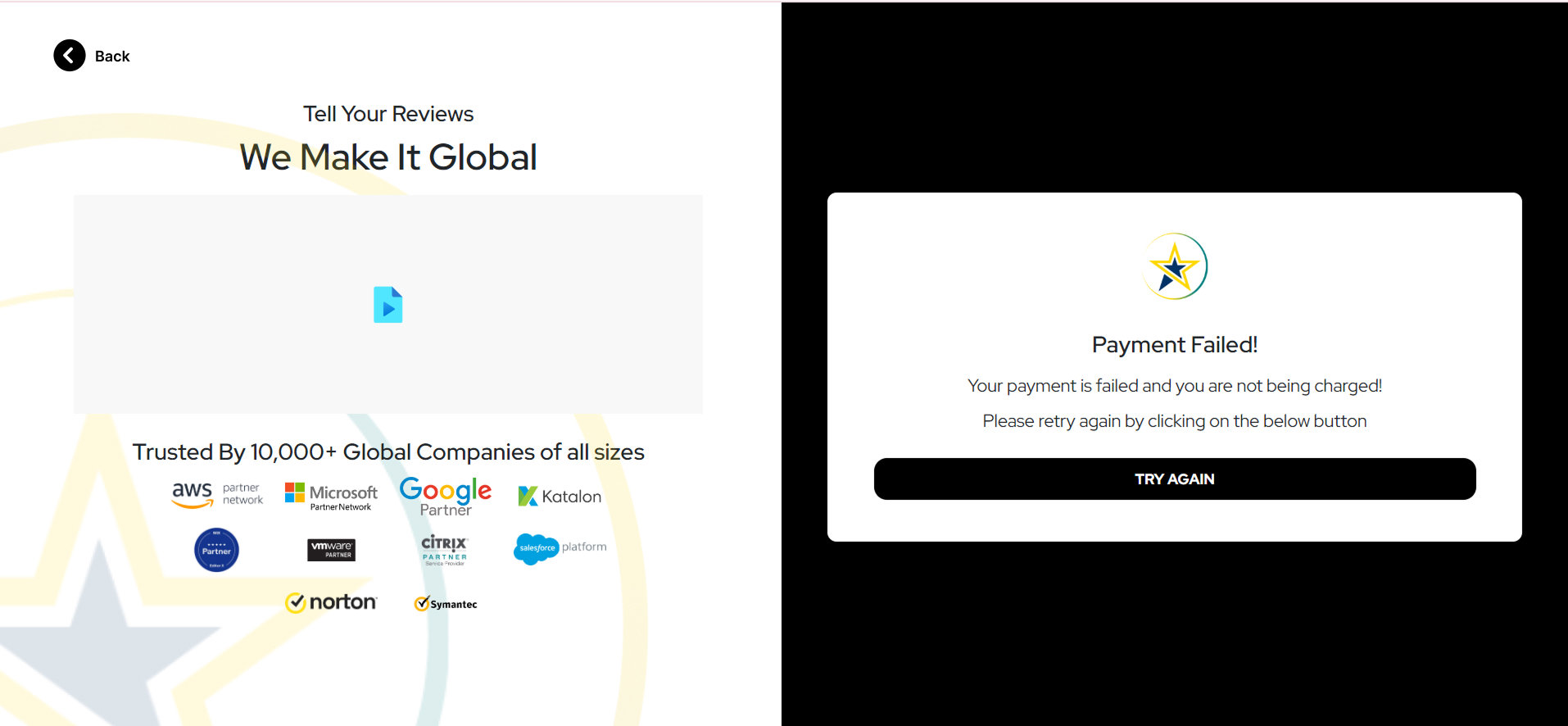
Payment Failed
↕ Scroll
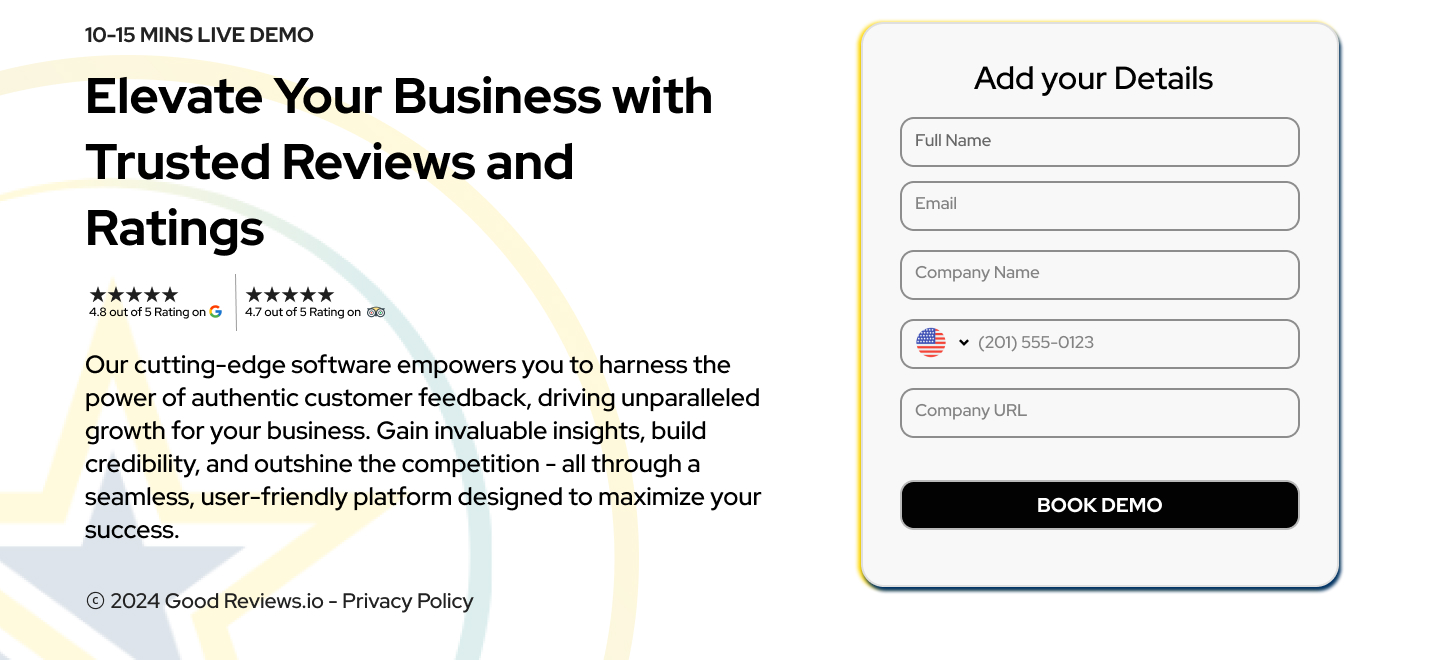
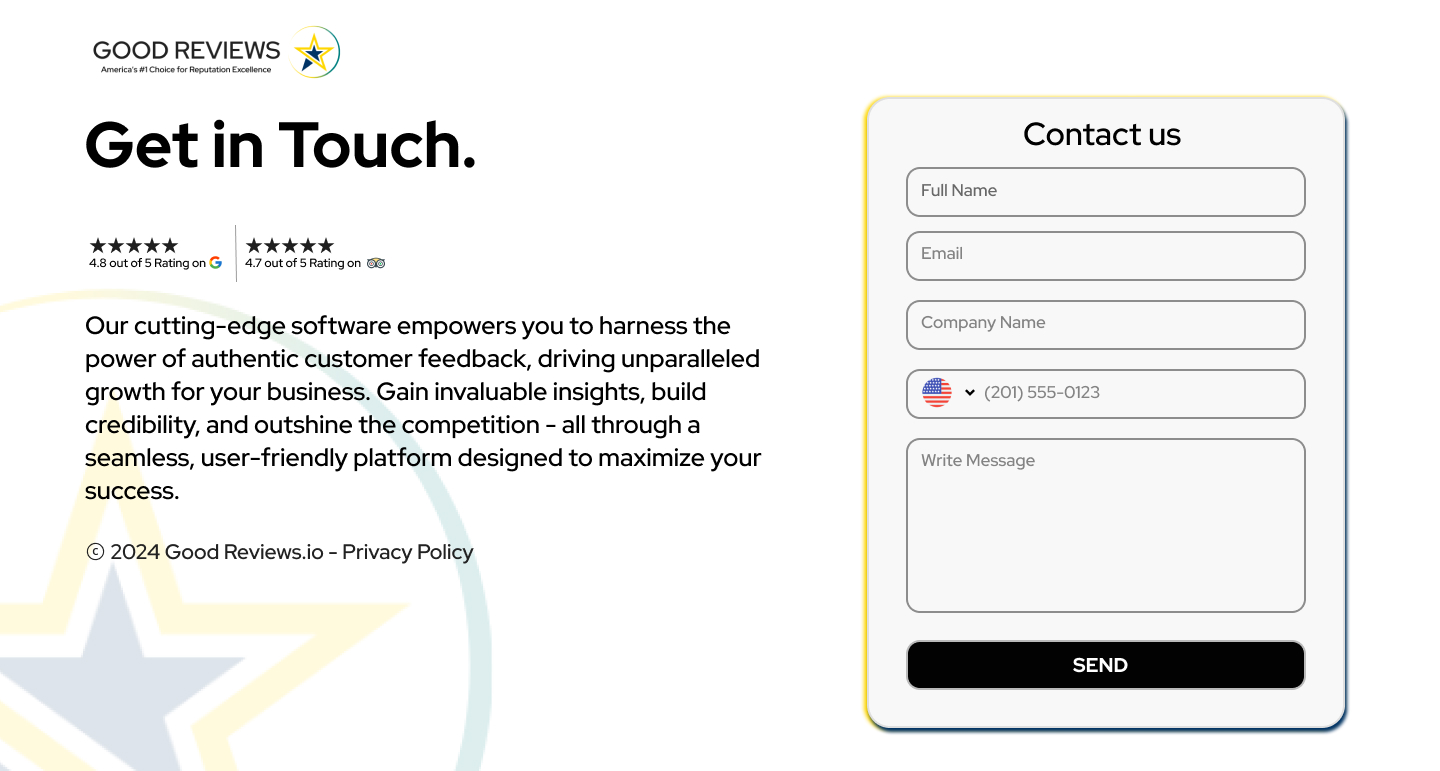
Contact Us
↕ Scroll
Restaurants
↕ Scroll
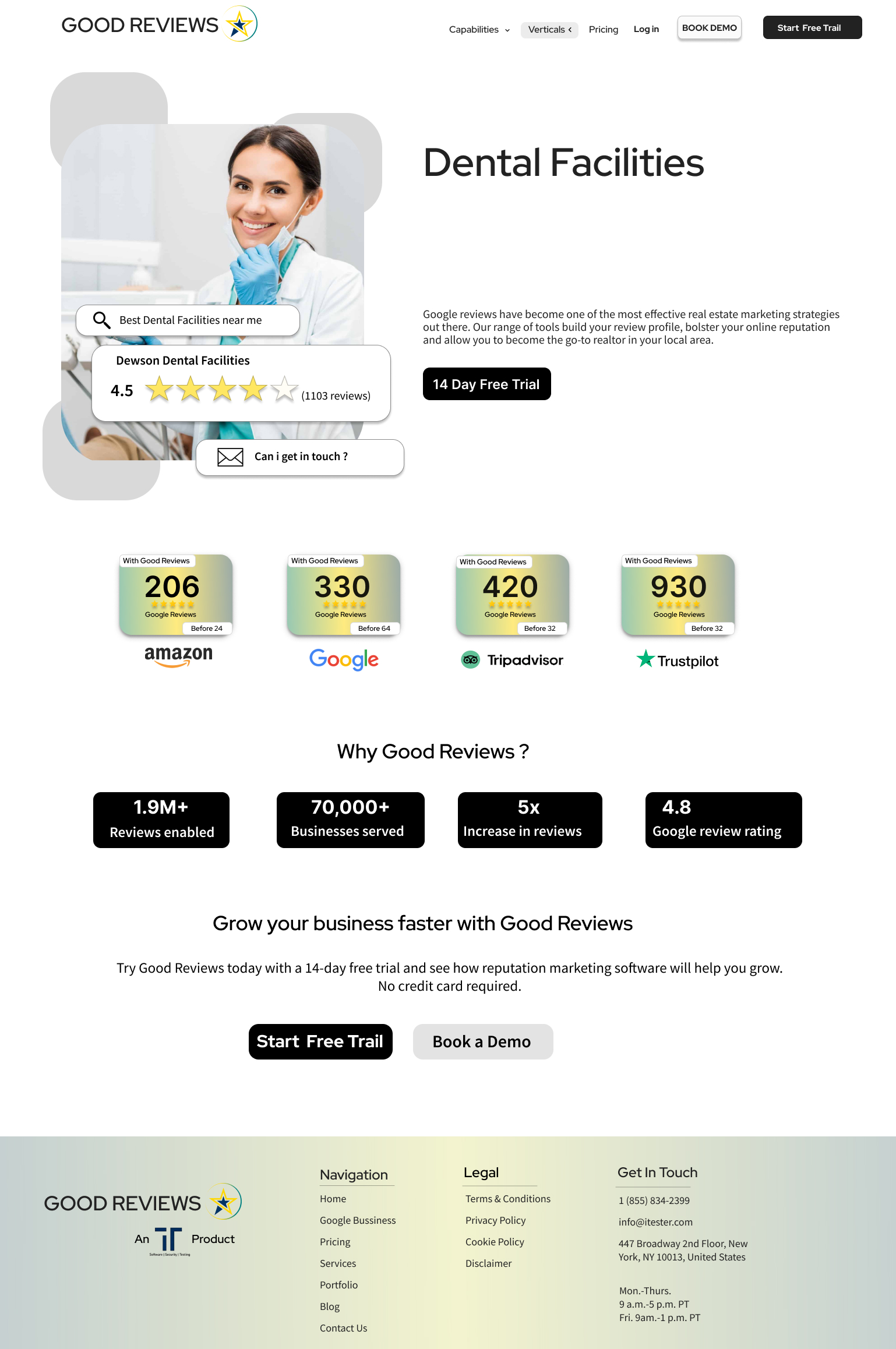
Healthcare
↕ Scroll
Real Estate
↕ Scroll
Beauty & Wellness
↕ Scroll
Dental
↕ Scroll
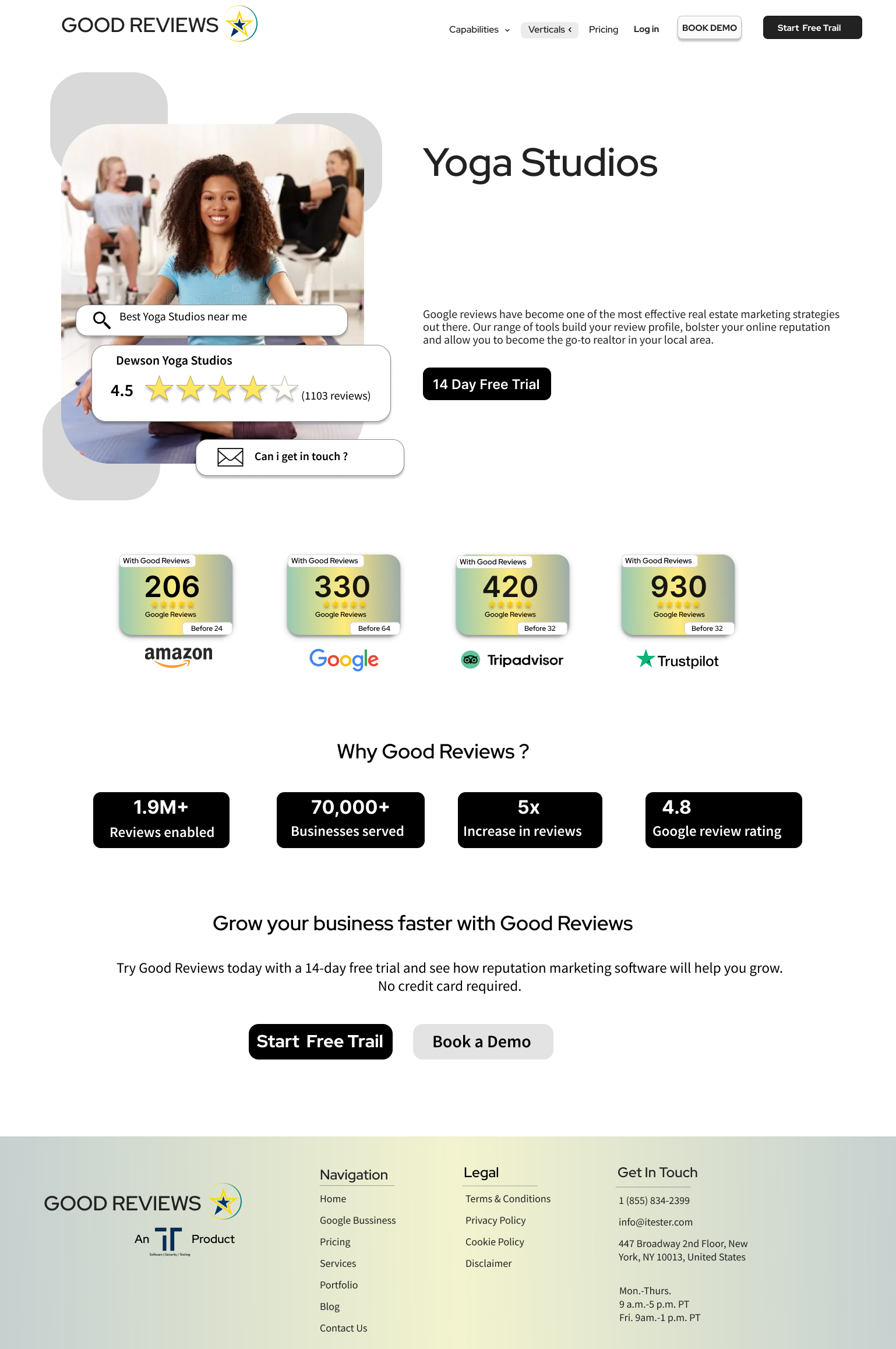
Yoga
Scroll inside each Mac screen · Use arrows to browse screens
User Roles & Flows
User roles & personas
Three user types across the reputation lifecycle — from industry discovery through subscription and ongoing review management.
Modular components and page templates — typography, color, spacing, and UI patterns unified across the SaaS core and every industry vertical.
Adopted across homepage, pricing, subscription, payment flows, and all 24 industry landing pages.
09 · Impact & Results
Impact & results
From concept to scalable SaaS — measurable outcomes across engagement, vertical scale, design consistency, and conversion-focused frontend delivery.
800%Increase in user engagement through conversion-focused design
24+Industry landing pages designed with one unified design language
1Scalable design system powering SaaS core and every vertical
End-to-endFlows from onboarding and pricing through payment and subscription
OmnichannelReview management across dashboards, analytics, and campaigns
Full case study document
Download the complete GoodReviews case study — covering reputation management UX, industry-specific landing pages, analytics dashboards, and campaign management modules.